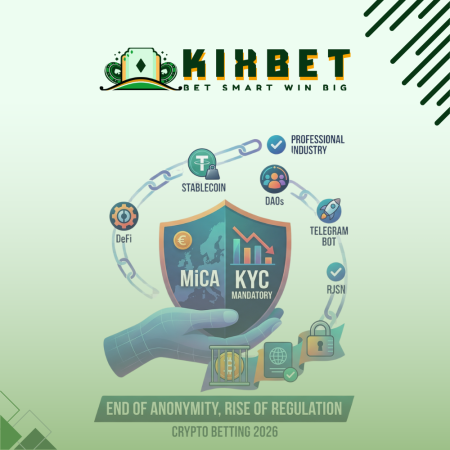
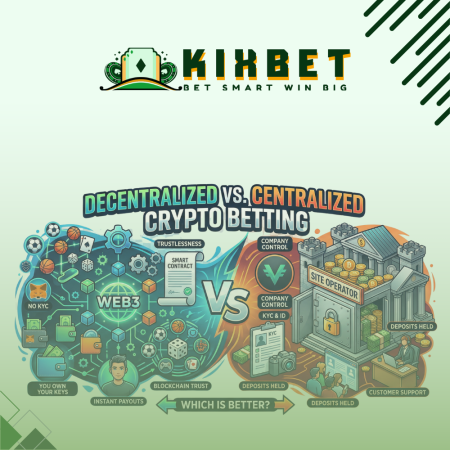
The year is 2026. If you are an online gambler, your world looks very different than it did five years ago. This is especially true for the crypto betting 2026 landscape, which has evolved from a niche, unregulated frontier into a highly professional and scrutinized industry. In this article, we will analyze the key shifts, focusing on the inevitable impact of regulation, the transformation of identity verification (KYC), and the overall theme of “the end of stealth” for bettors.
Remember when the primary appeal of using Bitcoin or Ethereum at a sportsbook was anonymity? That era is effectively over. The original, almost utopian, promise of untraceable gambling has met the hard reality of global law enforcement and financial stability frameworks. Consequently, both operators and users must adapt to a new set of rules.
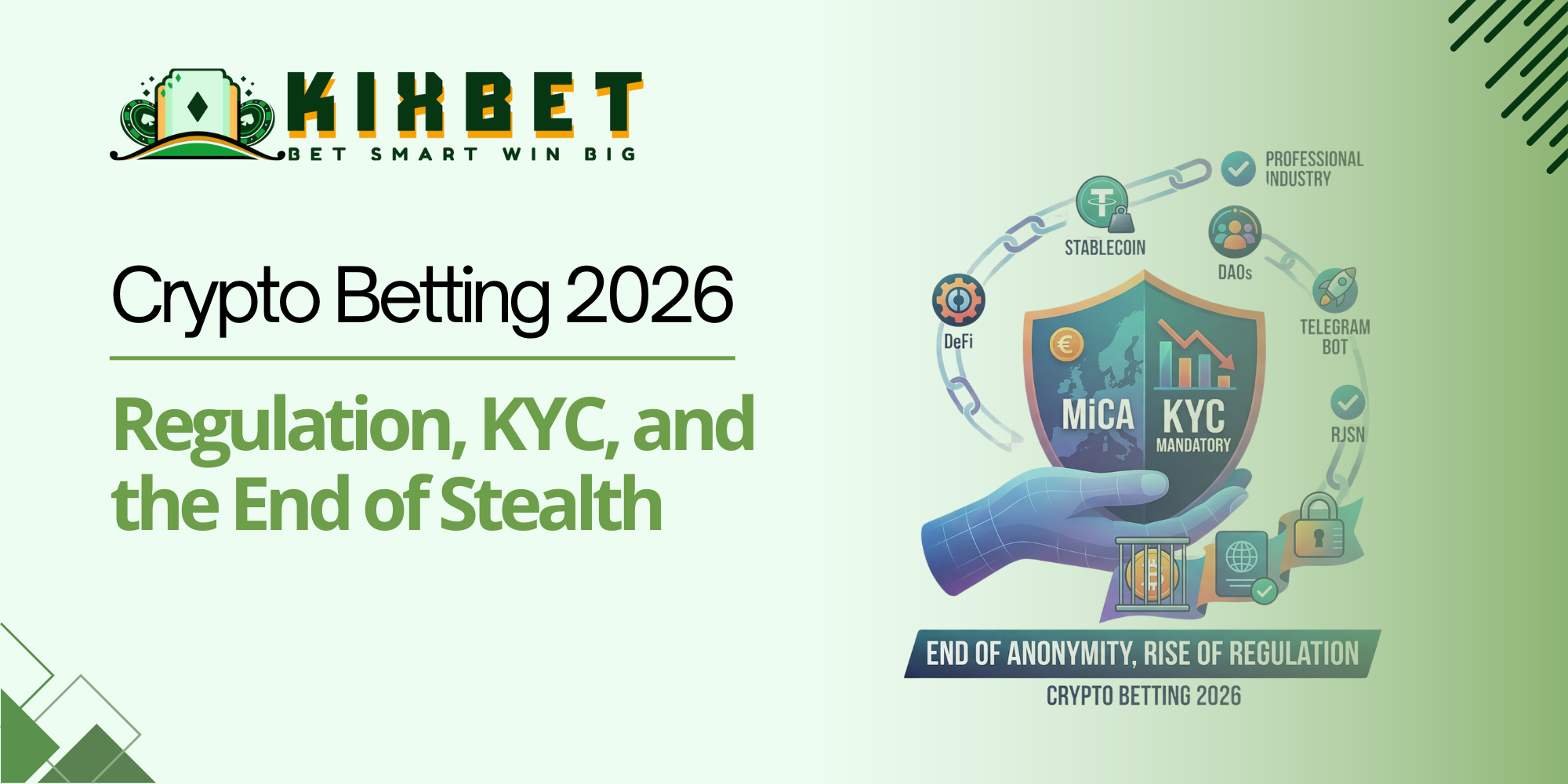
Crypto Betting 2026: Regulation, KYC, and the End of Stealth
The Regulatory Tsunami: Governments Step In
For years, crypto betting sites operated in a regulatory grey zone. They often held licenses in jurisdictions with less stringent oversight, like Curaçao. However, in 2026, major global powers have implemented robust frameworks to capture and control this market. As a result, governments are taming the “wild west” one jurisdiction at a time. Two major regulatory drivers have defined the crypto betting 2026 landscape.
The MiCA Effect in Europe
The first major driver is the European Union’s comprehensive regulation. The Markets in Crypto-Assets (MiCA) regulation, which began phased implementation years ago, is now fully active across all member states. MiCA harmonizes rules for the entire crypto industry, not just gambling. However, its requirements for Crypto Asset Service Providers (CASPs)—a definition that includes many large betting platforms—have transformed the sector.
Specifically, MiCA demands that any operator targeting EU residents holds a valid license from an EU member state. Furthermore, they must meet strict standards regarding capital reserves, IT security, and governance. Consequently, many offshore sites that once provided easy access for Europeans must now either obtain a MiCA-compliant license or explicitly block European traffic.
For bettors, this means the available choice of “pure” crypto sites has narrowed. However, the sites that remain—such as a localized version of BitStarz—offer significantly higher consumer protection. This creates a fascinating trade-off: users sacrifice some global choice for more security and legal recourse.
The US Squeeze and Financial Surveillance
Simultaneously, the United States has intensified its enforcement, despite the lack of a single, comprehensive federal crypto law. Instead, authorities apply existing anti-money laundering (AML) and banking laws to crypto platforms. The Financial Crimes Enforcement Network (FinCEN) has acted extremely aggressively.
In 2026, any platform that interacts with a US customer or utilizes US financial rails must adhere to strict Know Your Customer (KYC) and Suspicious Activity Report (SAR) filings, regardless of where it is based. Authorities are aggressively targeting platforms that fail to comply. A key focus has been decentralized protocols and “no-KYC” sites. The messaging is clear: financial surveillance is now an unavoidable reality for Americans in the space.
The Evolution of KYC: From Optional to Mandatory
This regulatory environment has directly led to the evolution of Know Your Customer protocols. The biggest shift in the crypto betting 2026 sector is the virtual disappearance of “no-KYC” sites. Previously, many popular platforms allowed users to deposit, play, and withdraw large amounts without providing anything more than an email address. That model is no longer legally viable for any serious, large-scale operation.
The Rise of “Hybrid” KYC Models
Faced with the need to comply without totally alienating their core user base, many sites have adopted a “hybrid” KYC model. This approach offers a strategic middle ground. It attempts to balance regulatory demands with user convenience, particularly for small-stakes players. For example, a site like BC.Game might allow a new user to sign up and play with minimal friction for smaller transactions.
However, the platform flips the real verification “switch” when certain thresholds are met. This often happens in the following situations:
- Large Individual Cashouts: Withdrawing $5,000 or more will almost always trigger a demand for a passport or utility bill.
- Cumulative Limits: Total life-time deposits surpassing a set amount (e.g., $10,000) will require full verification.
- Algorithmic Red Flags: Sophisticated monitoring software may flag an account for unusual betting patterns, triggering an immediate check.
- Using Stablecoins: Sites focused on compliance prefer stablecoins. These often require stricter KYC initially, reinforcing the mandatory verification loop.
For the average user, this means that while you might start your journey with a sense of privacy, any significant success or volume will trigger requirements for transparency. The era of playing purely in the shadows is gone.
International Cooperation and Shared Databases
But the “end of stealth” isn’t just about a site asking for your ID. The true sea change in 2026 involves how regulatory bodies share information. We are seeing unprecedented international cooperation. If a regulated platform in the UK flags a user, for example, regulators increasingly share that information with counterparts in the EU and the US.
For a user, this creates a “persistent identity.” You can no longer just hop from one site to another to avoid scrutiny. If your activity suggests money laundering or problematic gambling, that data will follow you across the regulated ecosystem. This is the ultimate expression of the transparent future that regulators have long sought.
Beyond Regulation: Key Market Trends for 2026
The regulatory narrative is dominant, but other stories define crypto betting 2026. The market itself has matured, producing trends that focus more on user experience, efficiency, and new technologies.
The Shift to Stablecoins: USD-Pegged Stability
This is arguably the biggest market shift. In 2022, Bitcoin and Ethereum volatility attracted many—you could win the bet and profit again when the coin’s value surged. In 2026, regular bettors see that volatility as a major downside.
The clear trend favors stablecoins, primarily USDT (Tether) and USDC. Why? They provide the speed and low transaction costs of crypto without the pricing risk. If you deposit $100 and bet $10, you think in US dollars. This helps players manage their bankrolls more effectively. For sites like Thunderpick, which focuses heavily on esports, stablecoins are now the default option for most users.
The Rise of DeFi and Blockchain-Native Platforms
But what about the core philosophy of decentralization? If all major sites become compliant “web 2” companies, where does true decentralization go? In 2026, it is thriving in a new form.
The “purest” form of decentralized gambling happens on protocols that use Smart Contracts to eliminate the need for a house entirely. These often function as Decentralized Autonomous Organizations (DAOs), where token holders govern the platform. While still a niche, this sector has grown. A platform like Dexsport leads the way as a Web3 sportsbook where the blockchain processes all actions—deposits, bets, and payouts—directly.
These protocols offer something that centralized sites cannot: true, verifiable fairness. Any user can verify every single bet’s result and payout on a public block explorer like Etherscan. However, interacting with these platforms requires crypto knowledge and non-custodial wallets. Furthermore, regulators are increasing pressure on these platforms to adopt decentralized identity tools, suggesting that absolute anonymity is fading here as well.
Telegram Bots and Niche Market Innovation
Finally, surprising innovation has changed how we access betting. The last year saw the explosive growth of Telegram Betting Bots. Telegram, with its massive, privacy-focused user base, provides a natural home for a simplified betting experience. These bots allow users to place complex bets directly in a chat window for better speed and simplicity.
While this might seem like a way to regain privacy, in 2026, it is mostly about convenience. The leading bots integrate with larger, regulated platforms. So, while the interface feels private, a fully compliant entity ultimately manages your funds according to the new KYC standards.
Bitstarz
Check out Bitstarz promotions.
Dexsport
Check out Dexsport promotions.
Thunderpick
Check out Thunderpick promotions.
Conclusion: The New Normal for Crypto Betting 2026
The journey of crypto betting has been dramatic. It began as a chaotic, exciting, and highly anonymous alternative to mainstream gambling. In 2026, it has grown into a transparent, professional, and tightly controlled industry. This evolution was inevitable.
The “end of stealth” does not mean the end of the industry; in fact, it likely means the opposite. It is the necessary step for crypto betting to achieve widespread adoption. By adopting hybrid KYC models and embracing robust regulation like MiCA, these platforms are moving into the mainstream.
For the user, the core advantages of speed and low transaction costs remain. However, the days of untraceable gambling are gone, replaced by a “new normal” where transparency and security are the primary benefits. So, if you are looking to place a bet in the world of crypto betting 2026, know this: you will have a safer, fairer, and more stable experience—but your wallet will no longer be an island of anonymity.
Check out our Davegas review: Davegas Casino Betting Site: Features and Advantage
Don’t forget to also check out: Decentralized vs. Centralized Crypto Betting Sites: Which Is Better?