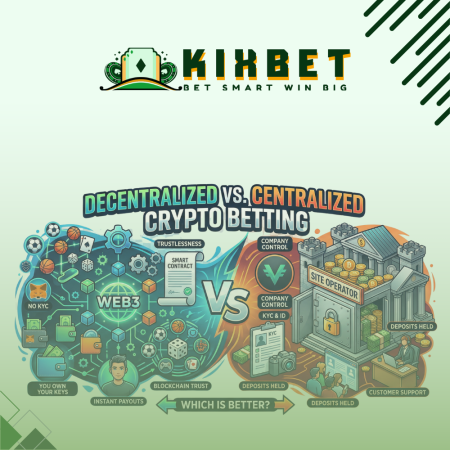
The gambling industry has undergone a massive transformation over the last few years. With the rise of blockchain technology, players are no longer restricted to traditional fiat bookmakers. Instead, they now face a pivotal choice: Decentralized vs. Centralized crypto betting platforms. While both options utilize digital assets, they offer vastly different experiences regarding security, speed, and privacy.
As we navigate through 2026, the debate continues to intensify. On one hand, centralized platforms provide the familiarity and polished user interfaces of traditional apps. On the other hand, decentralized sites offer a “trustless” environment where code is law. Consequently, understanding these differences is essential for any modern bettor looking to protect their bankroll and maximize their fun.
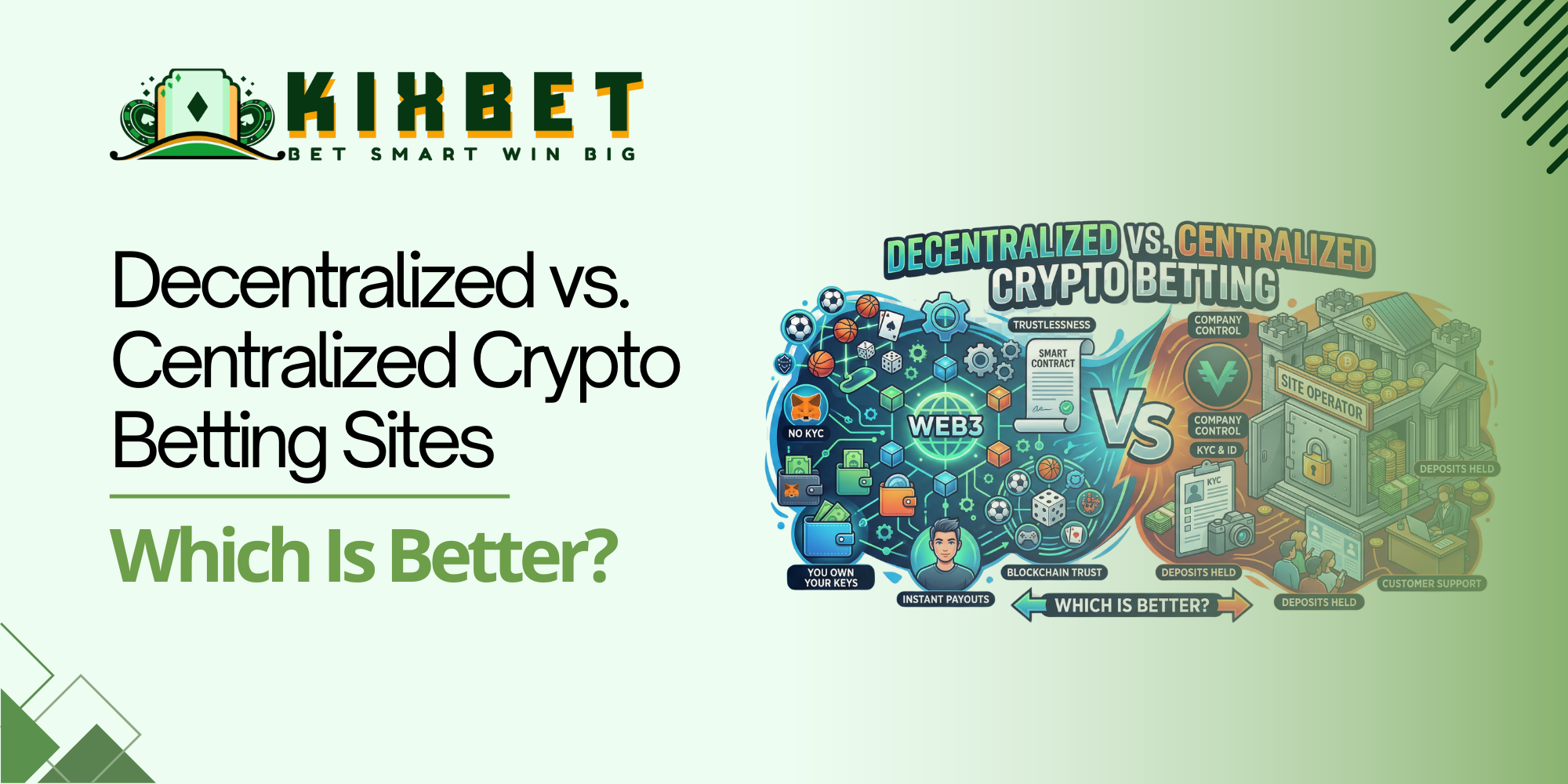
Decentralized vs. Centralized Crypto Betting Sites: Which Is Better?
Understanding the Core Difference: Decentralized vs. Centralized
Before diving into the specifics, it is vital to define what these terms actually mean in the context of betting. A centralized betting site, often referred to as a “CEX-style” platform, is owned and operated by a specific company. These entities hold your funds, set the odds, and decide when to pay out your winnings.
In contrast, a decentralized betting site operates on a blockchain using smart contracts. There is no central authority holding your deposit. Instead, the money remains in a smart contract until the event is settled. Therefore, the primary distinction lies in who controls the “keys” to your money and the data driving the platform.
How Centralized Betting Works
Centralized sites function much like a digital bank. When you sign up for a site like Vave or Stake, you create an account with an email and password. You then deposit your Bitcoin or Ethereum into a wallet managed by the site. While this is convenient, it means you are trusting the operator to remain solvent and secure.
How Decentralized Betting Works
Decentralized platforms, such as Dexsport or Azuro, utilize a non-custodial model. You simply connect your Web3 wallet (like MetaMask or Rabby) and place a bet directly from your own balance. Because the terms are written into the code, the payout is triggered automatically once the oracle confirms the match result. This eliminates the “human” risk of a bookmaker refusing to pay out a large win.
The Pros and Cons of Centralized Crypto Betting
Most players today still prefer centralized platforms. This is largely because they offer a seamless user experience that decentralized apps (dApps) sometimes struggle to match. However, this convenience comes with certain trade-offs that every user should consider.
Advantages of Centralized Platforms
- Superior Liquidity: Major sites like Bets.io and Thunderpick have massive user bases. This allows them to offer higher betting limits and more competitive odds on niche markets.
- Customer Support: If you lose access to your account or encounter a technical glitch, a centralized site has a human support team. You can chat with a representative in real-time to resolve your issues.
- Better Bonuses: Because they have high profit margins, centralized sites often provide massive welcome packages. For instance, platforms like 7Bit Casino are known for offering multi-BTC deposit bonuses.
Disadvantages of Centralized Platforms
- KYC Requirements: Most reputable centralized bookmakers must comply with regulations. Consequently, you may be asked to provide ID, proof of address, and other personal documents.
- Custodial Risk: Since the site holds your funds, you are vulnerable if the platform gets hacked or goes bankrupt. History has shown that even large entities can face liquidity crises.
- Account Freezes: A centralized operator can flag your account for “suspicious activity” or winning too much, leading to restricted stakes or frozen withdrawals.
The Rise of Decentralized (Web3) Betting Sites
As privacy becomes a global priority, the Decentralized vs. Centralized debate is shifting in favor of Web3 solutions. Decentralized betting is built for those who value financial sovereignty and anonymity above all else.
Why Players are Choosing Decentralization
The most significant draw of decentralized sites like Winz.io or TrustDice (which offers decentralized features) is the lack of a “middleman.” In a truly decentralized setup, your identity is nothing more than a wallet address. Furthermore, the transparency of the blockchain allows anyone to audit the site’s fairness. You don’t have to “take their word for it” because the smart contract code is public.
The Challenges of Going Decentralized
However, the decentralized world is not without its hurdles. First and foremost is the issue of “gas fees.” Every time you place a bet or withdraw, you must pay a small fee to the blockchain network. Additionally, the user interface can be daunting for beginners. Managing private keys and understanding network switching requires a steeper learning curve than simply logging into a standard website.
Direct Comparison: User Experience and Accessibility
When weighing Decentralized vs. Centralized, we must look at how the average person interacts with the platform. Below is a breakdown of the key metrics that affect your daily betting routine.
| Feature | Centralized (CEX) | Decentralized (DEX) |
|---|---|---|
| Sign-up | Email, Password, KYC | Wallet Connect (Anonymous) |
| Fund Control | Site holds your money | You hold your money |
| Payout Speed | Manual or Semi-Auto | Instant (via Smart Contract) |
| Mobile App | Excellent native apps | Mostly browser-based |
| Trust Factor | Trust in the Brand | Trust in the Code |
As shown in the table, centralized sites excel in accessibility. If you want to bet on your iPhone while sitting at a bar, a site like Jackbit offers a polished mobile experience. Conversely, if you are a “whale” concerned about a site stealing your five-figure win, the decentralized smart contract model provides much-needed peace of mind.
Top Real-World Platforms in 2026
To give you a better idea of where to play, let’s look at some of the industry leaders. These websites have established themselves as reliable options in the current market.
1. Vave (Centralized)
Vave has quickly become a giant in the crypto gambling world. They offer a massive sportsbook covering over 30 sports and thousands of events. While they are a centralized platform, their payout speed is incredibly fast compared to traditional rivals. They are a great choice for those who want a “one-stop-shop” for sports and casino games.
2. Cloudbet (Centralized)
Established in 2013, Cloudbet is one of the oldest names in the game. They offer deep liquidity and high limits, making them a favorite for professional bettors. Because they have a long-standing reputation, the custodial risk is lower than with a brand-new startup.
3. BetFury (Hybrid/Decentralized)
BetFury offers a unique middle ground. While it has centralized features, it heavily utilizes blockchain mechanics like staking and native tokens. This allows players to earn “passive income” from the house’s profits, bridging the gap between a standard bookie and a DeFi protocol.
4. Shuffle (Modern Hybrid)
Shuffle is a rising star in 2026. It focuses on a “Web3-first” approach with optional KYC and instant withdrawals. It captures the speed of decentralization while maintaining the high-quality UI of a centralized site.
Security Deep Dive: Which is Safer?
Security is the most important factor in the Decentralized vs. Centralized debate. Interestingly, both models have unique vulnerabilities. For a centralized site, the main threat is an internal hack or a “rug pull” where the owners disappear with the deposits. For example, if a database is breached, your email and personal data could be leaked.
On the other hand, decentralized sites are vulnerable to “smart contract bugs.” If the code governing the bets has a flaw, a hacker could drain the entire liquidity pool. Since there is no “owner” to call, those funds are usually lost forever. Therefore, it is essential to only use decentralized platforms that have undergone multiple third-party audits by firms like CertiK or PeckShield.
The Role of Oracles in Decentralized Betting
A common question is: “How does a decentralized site know who won the Lakers game?” This is solved by Oracles. Oracles are data feeds that bridge the gap between the real world and the blockchain. Platforms like Chainlink provide secure, tamper-proof data to smart contracts.
In a centralized setting, the site’s employees manually enter the results. This leaves room for human error or even intentional manipulation. By using decentralized oracles, the betting process becomes entirely automated. This automation ensures that no single person can change the outcome of a bet once it has been placed.
Stake
Check out Stake promotions.
Betfury
Check out Betfury promotions.
Shuffle
Check out Shuffle promotions.
Conclusion: Which Should You Choose?
Ultimately, the choice between Decentralized vs. Centralized depends on your personal priorities. If you are a casual bettor who wants a pretty interface, 24/7 support, and big bonuses, then centralized sites like Vave or Thunderpick are likely your best bet. They offer a level of convenience that is hard to beat.
However, if you are a privacy advocate or a high-stakes player who doesn’t want to trust a corporation with your money, decentralization is the way forward. Platforms that utilize smart contracts provide a level of transparency and security that centralized entities simply cannot match. As the technology matures, the gap between these two models will likely close, leading to a “hybrid” future where we get the best of both worlds.
Whichever path you choose, always remember to gamble responsibly and only use funds you can afford to lose. The world of crypto betting is exciting, but it moves fast—stay informed and stay safe.
Check out our Davegas review: Davegas Casino Betting Site: Features and Advantage
Don’t forget to also check out: Crypto Betting 2026: New Rules in Brazil and Asia